Presentation
Established in January 2008, the Master’s Program in Computer Science and Technology (CTC) at the Federal University of Itajubá (UNIFEI) is dedicated to developing highly qualified professionals. The program aims to prepare individuals for research and teaching careers in Computer Science, as well as for leadership roles in the industry. Graduates are expected to be well-prepared to pursue doctoral studies in Brazil or abroad and to contribute effectively to the job market with the knowledge and skills acquired. Another key goal of the program is to foster high-quality research, contributing to the scientific and technological advancement of the country. Students are expected to engage in research activities and produce at least one scientific paper published in an internationally recognized journal or conference. The admission process takes place twice a year, with applications typically open from November to January for February intake and from June to July for August intake.
Graduate Competencies and Program Structure
The Master’s Program in Computer Science and Technology at UNIFEI is designed to develop highly skilled professionals capable of excelling in academia, research, and the industry. The program emphasizes the following competencies:
- Research and Innovation: Ability to conduct high-impact scientific and technological research, fostering innovation and contributing to advancements in Computer Science and Technology.
- Complex Problem-Solving: Skills to identify, model, and solve computational problems, applying advanced techniques and rigorous methodologies.
- Interdisciplinary Collaboration: Capacity to work in multidisciplinary projects, collaborating with professionals from different fields to develop innovative solutions.
- Knowledge Dissemination: Ability to share research findings through scientific publications, presentations at conferences, and the development of software and patents.
- Ethics and Social Responsibility: Commitment to the ethical application of computing knowledge, considering social, economic, and environmental impacts.
- Higher Education Teaching: Solid academic training to teach and conduct research in higher education institutions, contributing to the education of future generations of computing professionals.
Graduates must demonstrate these competencies by actively participating in research and technology development, fulfilling at least the following requirements:
- Publication of a scientific article in an internationally recognized journal or conference,
- Registration of a patent or software, and
- A research presentation (pitch) for scientific dissemination.
Curriculum Structure and Learning Path
The curriculum is designed to ensure that students acquire the essential competencies expected of graduates. To complete the program, students must earn 24 credits, which correspond to approximately eight courses, including core courses that provide a strong foundation in Computer Science and Technology.
The core courses were carefully selected to align with CAPES guidelines and to ensure a comprehensive and in-depth education in the field. These include:
- Algorithms and Data Structures (mandatory for all students) – foundational for a strong understanding of computing principles.
- Software Engineering (for students in the Computational Mathematics concentration area) – essential for understanding software development processes and methodologies.
- Operating Systems (for students in the Computer Systems concentration area) – providing a solid foundation in computer system operations.
Elective Courses and Research Areas
In addition to the core courses, students can choose from a variety of elective courses, organized according to their research area and concentration:
- Computational Mathematics: Artificial Intelligence and Applied Computing
- Computer Systems: Hardware and Software Foundations
The elective courses are designed to provide specialized knowledge in key areas, allowing students to develop expertise in their chosen field. The full list of elective courses is shown in Table 1.1.
Table 1.1 – Courses by Concentration Area and Research Lines
Concentration Area | Research Line | Key Courses |
Computational Mathematics | Artificial Intelligence | Algorithms and Data Structures, Software Engineering, Artificial Intelligence, Special Topics in AI, Artificial Neural Networks, Introduction to Metaheuristics, Metaheuristics, Data Science in R, Introduction to Integer Optimization, Modeling and Simulation of Systems, Discrete Mathematics, Theory of Computation. |
Computational Mathematics | Applied Computing | Algorithms and Data Structures, Software Engineering, Experimental Software Engineering, Special Topics in Software Engineering, Databases, Internet of Things, Special Topics in Computational Intelligence, Software Architecture, Modeling and Simulation of Systems, Information Visualization, Technologies Applied to Autism Spectrum Disorder, Technological Entrepreneurship. |
Computer Systems | Hardware and Software Foundations | Algorithms and Data Structures, Operating Systems, Computer Networks, Distributed Systems, Special Topics in Distributed Systems, Computer Architecture, Parallel Computing, Introduction to Microelectronics, Digital Signal Processing and Control, Digital Integrated Circuit Design, Mobile Robotics I, Mobile Robotics II, Logical Synthesis Using VHDL, Special Topics in Hardware and Software Foundations. |
Alignment with Program Objectives and Mission
The curriculum structure is closely aligned with the mission of the program, which is to train exceptional researchers and educators committed to addressing technological challenges and driving scientific advancements. The selection of courses ensures that graduates are well-equipped to:
- Conduct high-quality research, fostering advancements in Computer Science and promoting technological innovation.
- Excel in teaching and industry roles, maintaining a high standard of competence, ethics, and social responsibility.
- Disseminate knowledge through scientific publications, software development, and patent registrations.
- Contribute to sustainable development and digital transformation, reinforcing UNIFEI’s commitment to education and societal impact.
About
- Degree: Master
- Capes' Rating: Grade 3
- Duration: 360 hours
- Campus: Itajubá
Coordination
COORDINATOR
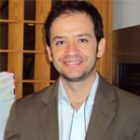
Prof. Adler Diniz de Souza
comp.pg@unifei.edu.br
DEPUTY COORDINATOR
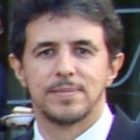
Prof. Sandro Carvalho Izidoro
comp.pg@unifei.edu.br
Scholarship Committee
- Professor Adler Diniz de Souza
- Professor Sandro Carvalho Izidoro
- Professor Melise Maria Veiga de Paula
- Professor João Paulo Reus Rodrigues Leite
- Gustavo Rezende de Almeida
Secretary
- Juraci Magalhães Rodrigues / Gustavo Viana Rosa
- In-person service: Mondays, Wednesdays, and Thursdays from 7:30 AM to 11:00 AM and from 1:30 PM to 4:30 PM
- Remote work hours: Tuesdays and Fridays from 7:30 AM to 11:00 AM and from 1:30 PM to 4:30 PM
- posgrad.itabira@unifei.edu.br
- +55 (31) 3839-0809 / +55 (35) 3629-1121 (available only between June 15 and June 25, 2026)